The injury
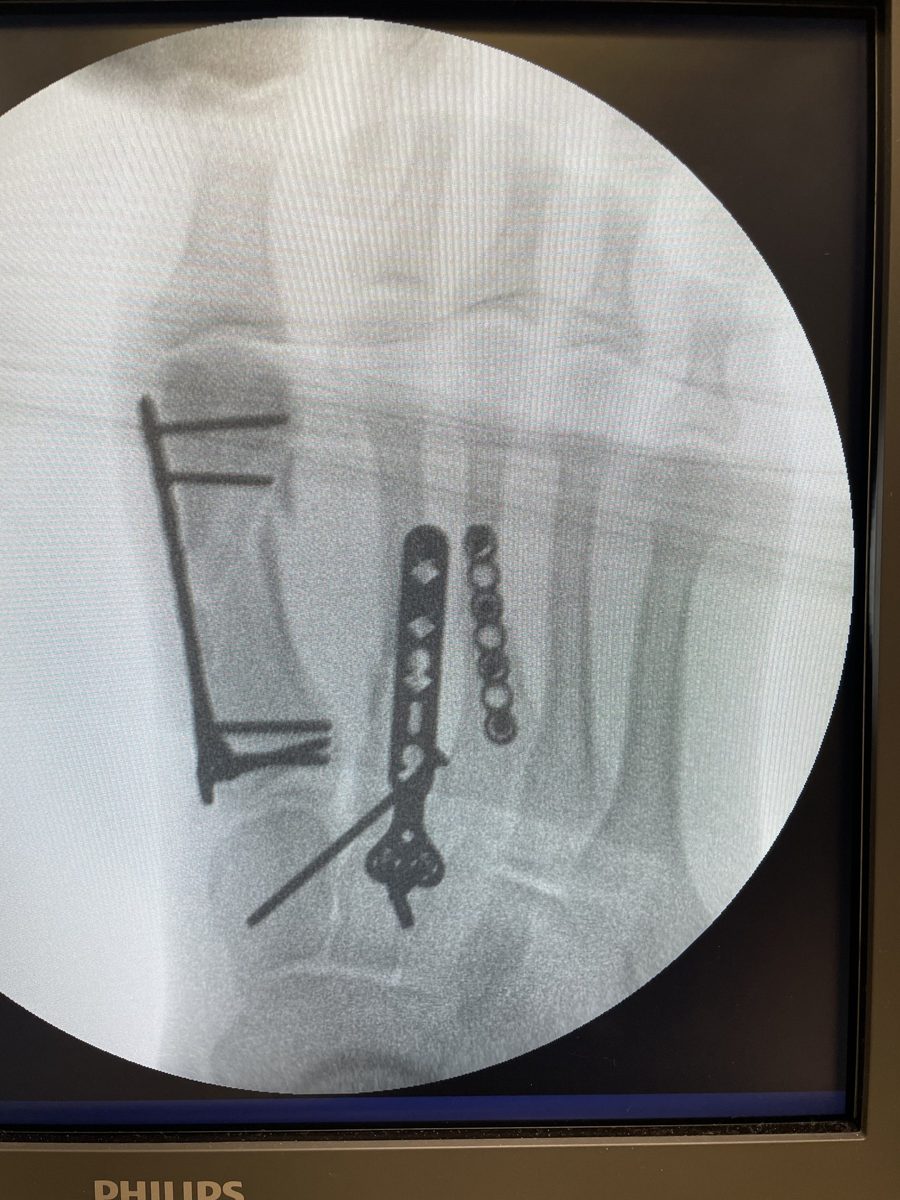
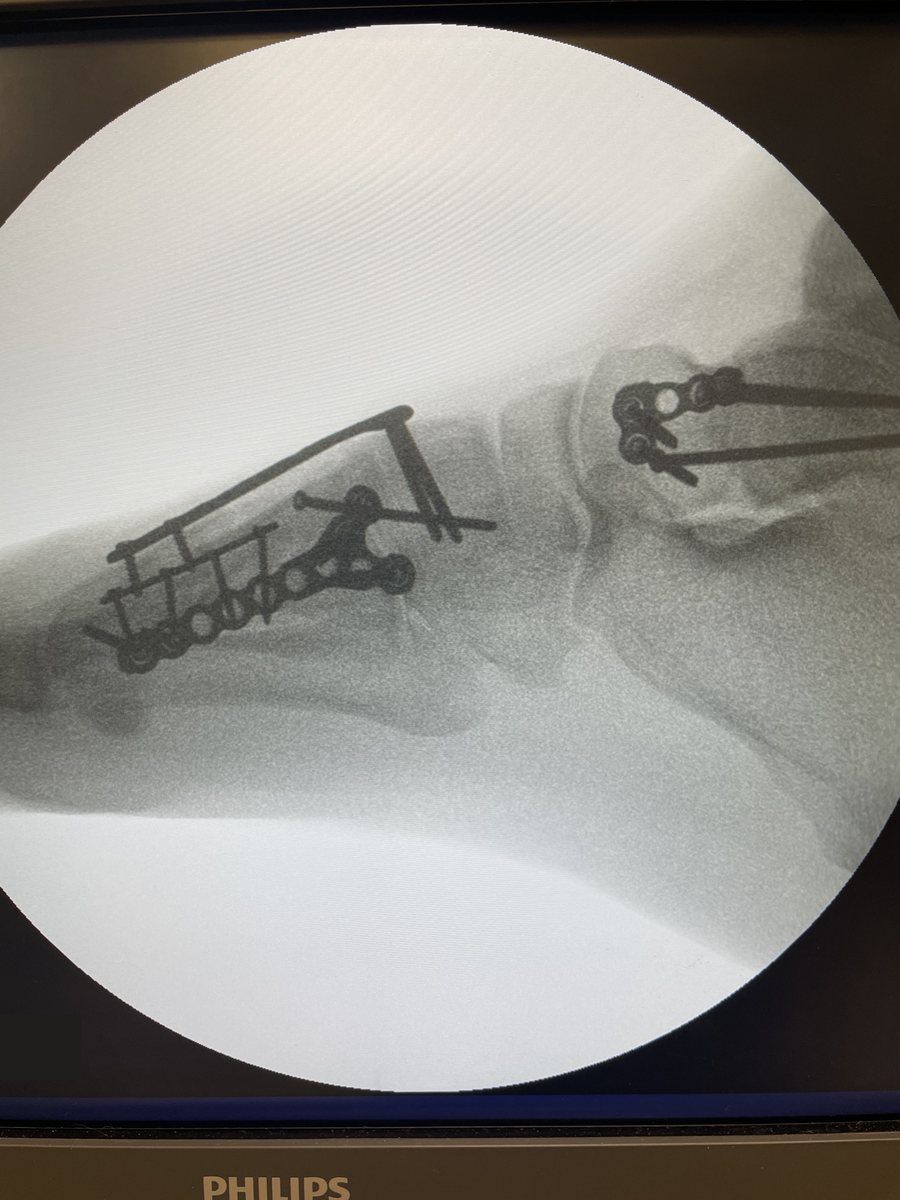
A fracture of one or more of the five metatarsals, caused by a crush injury, a heavy object falling onto the foot, a twisting fall or a high-energy accident. Several metatarsals are often involved together, at times in association with a Lisfranc injury.
When surgery is advised
Most isolated, undisplaced metatarsal fractures unite in a stiff-soled shoe or a boot. Fixation is advised where there is shortening, angulation or displacement, particularly of the first metatarsal or of several adjacent bones, since malunion alters load distribution across the forefoot.
The operation
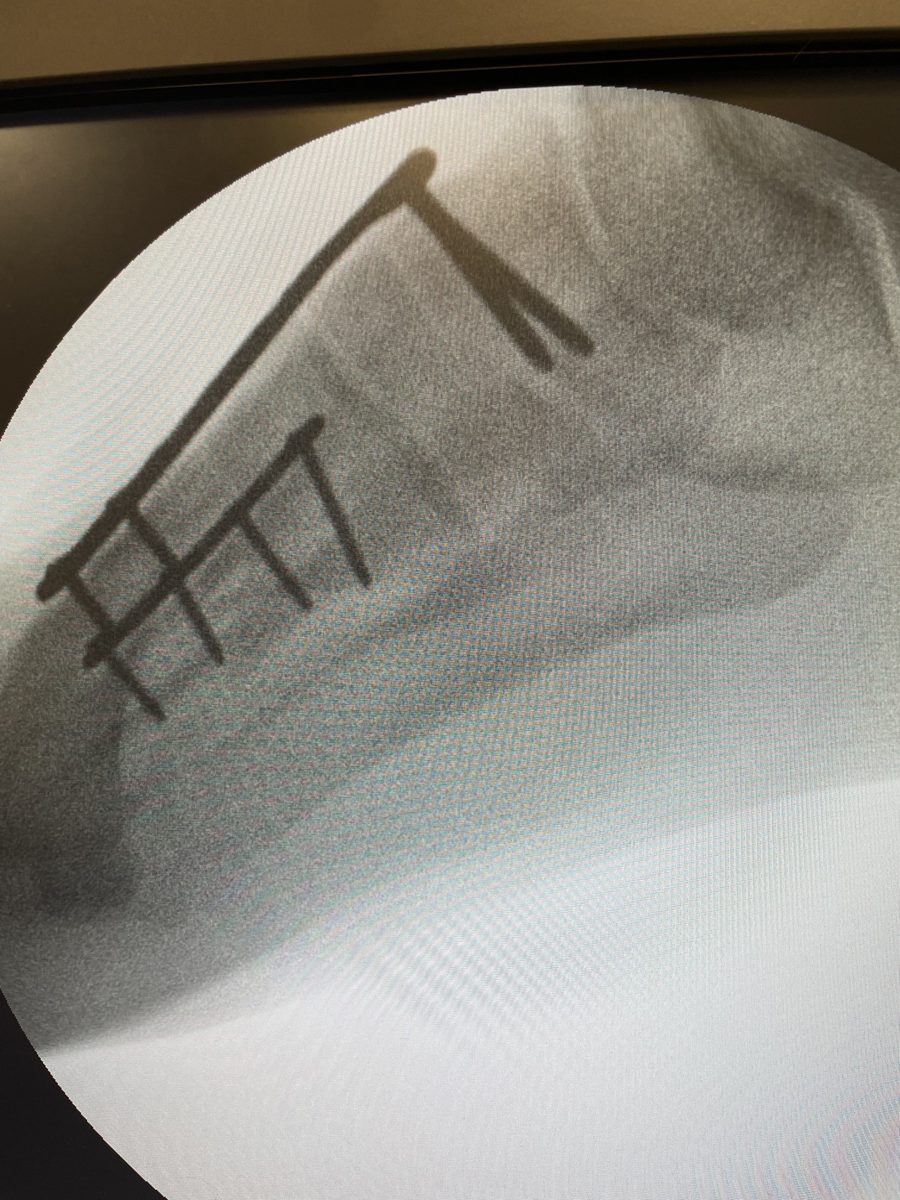
Each fracture is reduced through a dorsal incision to restore length and the arch, and held with low-profile plates and screws. Associated midfoot injuries are stabilised at the same sitting.
Recovery
Two weeks of elevation in a splint while the wounds heal, followed by a boot. Weight-bearing is increased from approximately six weeks as radiographs demonstrate union. Forefoot swelling may take several months to resolve.
Arranging an appointment. Private patients are seen at King Edward VII's Hospital, The London Clinic, Cromwell Hospital and HCA Healthcare at The Shard. NHS patients are seen at King's College Hospital.
Call 020 7046 8004 or send an enquiry.
Radiographs are from my own practice, reproduced uncropped with identifying details removed. This page provides general information and is not a substitute for individual assessment.