The injury
Disruption of the ligaments and joints between the metatarsals and the tarsal bones. The mechanism may be a twisting fall on a planted foot, a pedal injury in a road traffic collision, or an apparently minor sprain that fails to settle. The injury is readily missed on initial radiographs.
Diagnosis
Weight-bearing radiographs of both feet, supplemented by CT or MRI where the diagnosis remains uncertain. Plantar bruising is a recognised sign.
Treatment
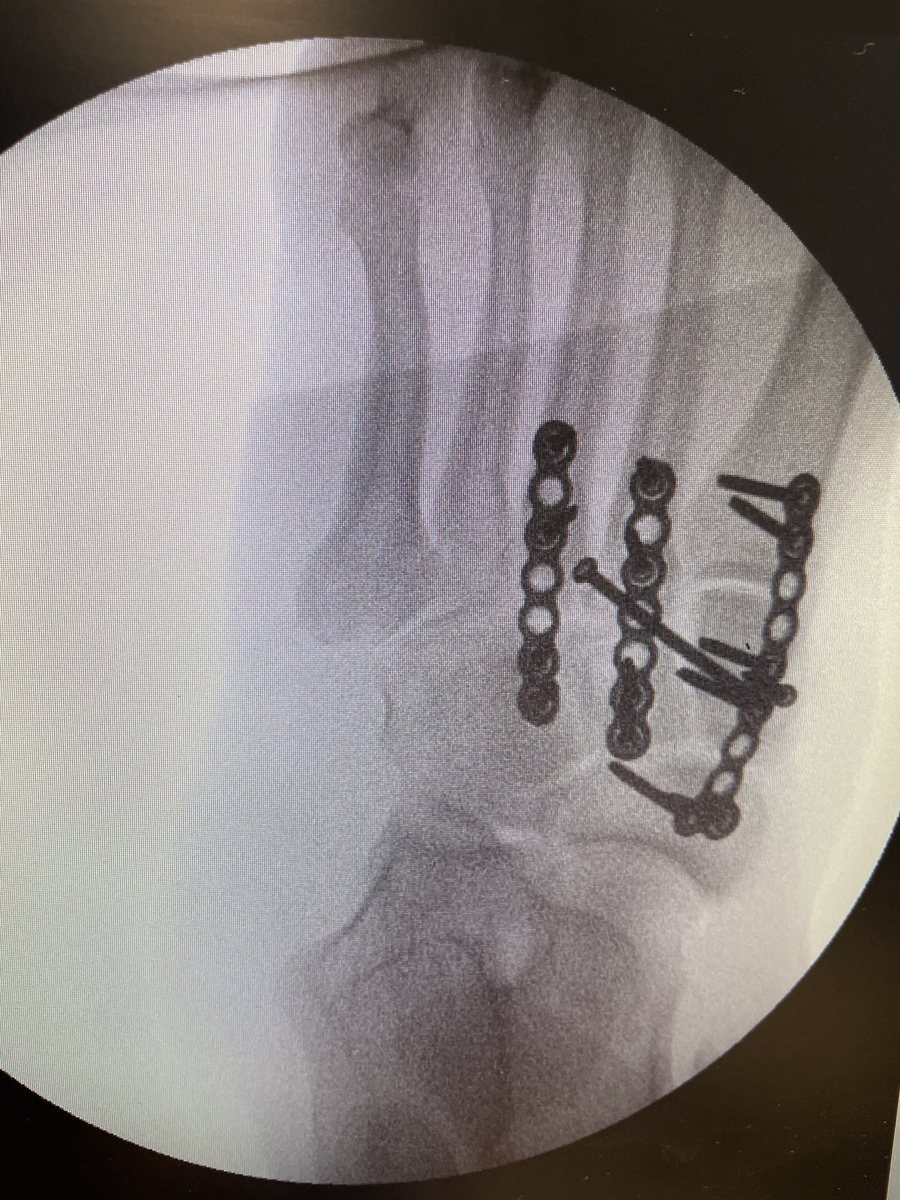
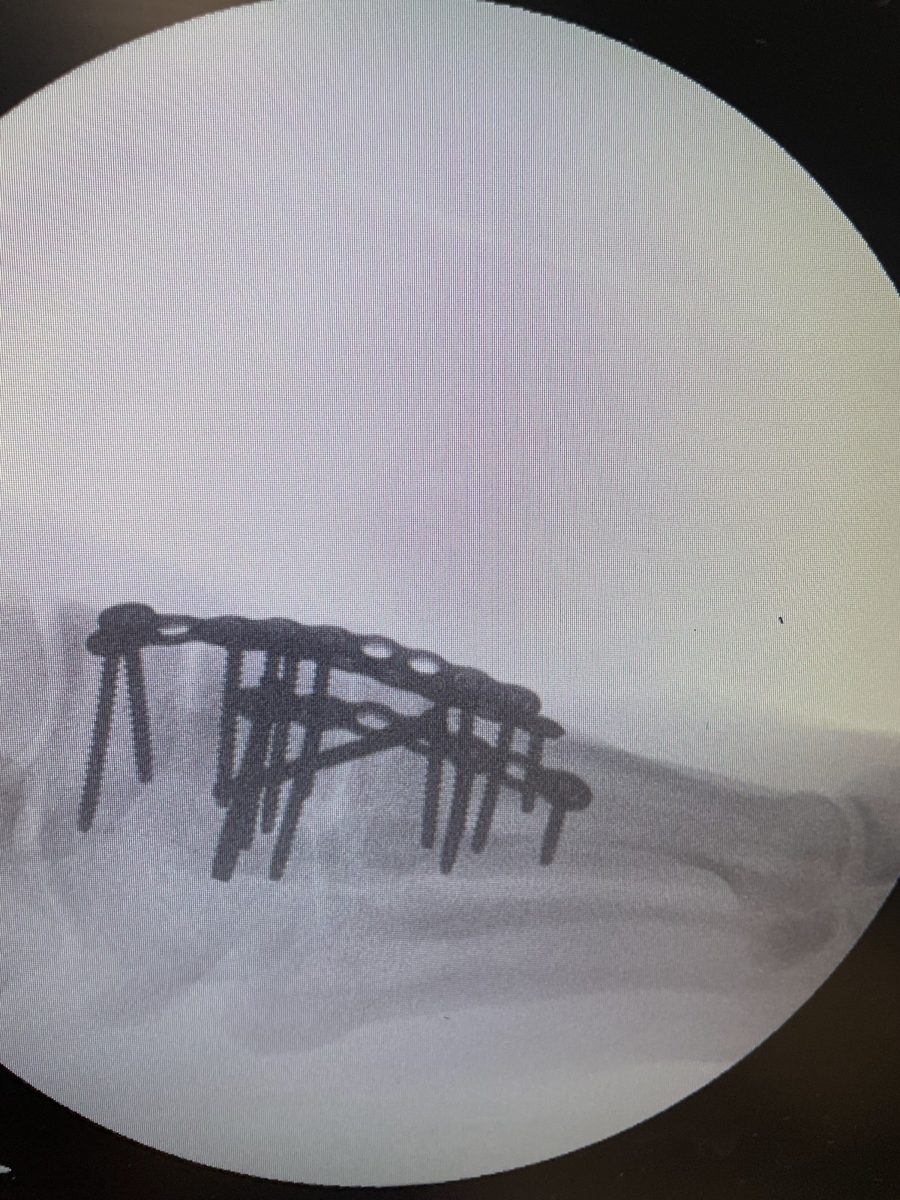
Displaced injuries are stabilised operatively. The joints are reduced through one or two dorsal incisions and held with transarticular screws or with plates that bridge the joints. Purely ligamentous injuries are sometimes treated by primary fusion, as the ligament heals poorly.
Recovery
Six weeks non-weight-bearing is usual, followed by a boot. Bridging plates are commonly removed at four to six months, once the ligaments have healed.
Arranging an appointment. Private patients are seen at King Edward VII's Hospital, The London Clinic, Cromwell Hospital and HCA Healthcare at The Shard. NHS patients are seen at King's College Hospital.
Call 020 7046 8004 or send an enquiry.
Radiographs are from my own practice, reproduced uncropped with identifying details removed. This page provides general information and is not a substitute for individual assessment.